
Candidate information session
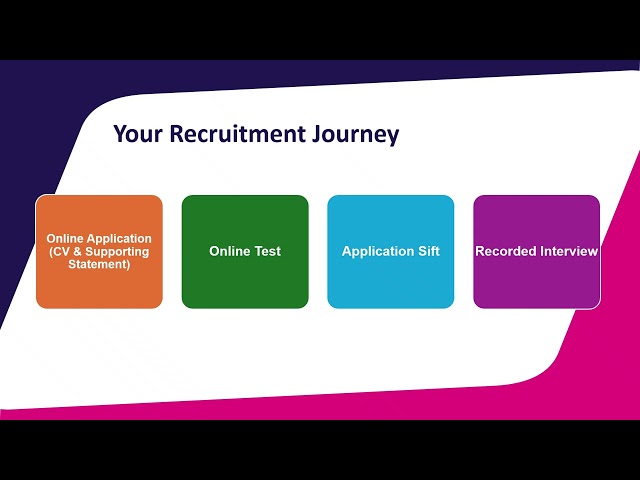
The workshop covers topics such as our ways of working, the Client Manager roles and the recruitment journey.
Video transcript
00:00:01:07 - 00:00:30:17
Kelly
Hello everyone and thank you for viewing this recorded version of our candidate Information session for our Client Manager roles. My name is Kelly and I'm one of the Resourcing Consultants here at Social Security Scotland. So before we get started, let me give you a quick overview of what we'll cover in today's workshop. First, I'll give you a bit of background about Social Security Scotland and the important work we do.
00:00:30:20 - 00:00:58:11
Kelly
We'll then talk about how we work as an organisation. Some of the positive changes we've made in recent years and where our offices are based. After that, we'll move on to the benefits of working with us and becoming a civil servant. We'll also take a closer look at the B1 Client Manager roles. This is a campaign to fill B1 case manager roles and client Experience Officer roles.
00:00:58:15 - 00:01:34:00
Kelly
We will tell you more about each of them in more detail later in the presentation. We will then look at what our recruitment journey actually looks like, step-by-step. We'll cover Success Profiles and Behaviours and the Use of Artificial Intelligence. So who are we? Social Security Scotland is an executive agency of the Scottish Government, set up in 2018 to deliver benefits for people across Scotland.
00:01:34:03 - 00:02:14:23
Kelly
We look after the benefits that have been devolved from the UK government, which means everything we deliver has been designed specifically with the people of Scotland in mind. We currently deliver a range of low income and health related benefits as part of the civil service. We follow the Civil Service Code, which includes integrity, honesty, objectivity and impartiality. But here at Social Security Scotland we also have our own values, which are dignity, fairness and respect and these sit at the heart of everything we do.
00:02:14:26 - 00:02:43:06
Kelly
We strive to be a welcoming and inclusive organisation that truly represents the people of Scotland. And so in order for us to deliver this vital work, we need the right people with the right attitude who align with these values. Our recruitment process is inclusive, and we actively encourage applicants from people with lived experience and from all walks of life.
00:02:43:09 - 00:03:10:06
Kelly
Our ways of working. At Social Security Scotland, we've made changes to the way we work to give colleagues more flexibility and a better work-life balance. Right now, we use a hybrid model. Most people spend around two days a week in the office and the rest working from home, depending on the role and business needs. If you join us, we'll make sure you're fully set up from day one.
00:03:10:06 - 00:03:41:18
Kelly
You'll get everything you need. Laptops, monitors, a desk, and a chair if you need it. Because we want you to feel comfortable and supported wherever you're working. We also have a wide range of resources and flexible working options to help you do your job well and feel your best at work. Most of our colleagues are based in either Dundee or Glasgow, with some working out in local communities to provide face-to-face support.
00:03:41:20 - 00:04:08:26
Kelly
In Dundee, we've got two offices, Agnes Husband House and Enterprise House, both just a few minutes walk from the train station. In Glasgow, we’re based at 220 High Street, right next to High Street station, and only about ten minutes walk from Queen Street train station. All our offices are open-plan, fully accessible and designed to help you work comfortably.
00:04:08:29 - 00:04:33:26
Kelly
Every desk comes with dual monitors, a keyboard and mouse, and plenty of charging points. You'll also find standing desks, meeting booths and conference rooms on every floor. And of course, we've made sure our kitchen areas have everything you need. Plus cafes in our main building serving hot drinks, snacks and light meals at reasonable prices.
00:04:33:29 - 00:05:05:22
Kelly
Let's talk about some of the benefits of working for us. There are lots of great reasons to build your career with Social Security Scotland. First, we have a progressive salary model. Starting at the Scottish Government B1 grade minimum., this can be found in the job advert and also online. You get access to the Civil Service pension. The pension scheme here is really generous and it'll give you a real long term security.
00:05:05:24 - 00:05:37:16
Kelly
A job with us also gives you gives you a balanced work life. Offering 25 days of annual leave on joining plus 11.5 public and privileged holidays. After two years of service, your annual leave allowance increases to 30 days. On top of this, we also offer up to six days paid special leave a year for any colleague who wishes to participate in volunteering.
00:05:37:18 - 00:06:09:18
Kelly
Our full time week is 35 hours, Monday to Friday between 7am and 7pm. That's between and not from. Those are our core hours, so no weekend working and any overtime is optional. Never expected. When you join, you'll get full training and there are loads of development opportunities, online learning workshops and support to help you grow in your career.
00:06:09:20 - 00:06:41:25
Kelly
Wellbeing is also really important to us. We offer reasonable adjustments where needed and access to a 24/7 Employee Assistance Program, which is confidential and completely free. We're really proud of our inclusive culture. We're recognised as both a Disability Confident and Care Positive Employer. And once you're in the organisation and complete your nine-month probation, you can apply for any
00:06:41:28 - 00:07:17:13
Kelly
internal civil service opportunities, so it's a really good foot in the door to build your career. Okay. So on the screen you'll see the key details for our client manager roles currently being advertised. The Client Manager advert covers both Case Manager and Client Experience Officer roles. If you're successful at interview and are offered a position, your specific role will be allocated based on your skills, experience and needs of the business area.
00:07:17:16 - 00:07:50:12
Kelly
With regards to working patterns, if you're successful in being offered a post and are interested in a different working part pattern, you can request this at pre-employment stage and the business area will look at it based on operational requirements. As a Case Manager or Client Experience Officer you will play a key role in supporting clients by reviewing applications, assessing information and managing a complex caseload.
00:07:50:15 - 00:08:26:15
Kelly
You will balance this with engaging with clients to gather information, explain decisions and ensure they receive the support they are entitled to. You will also demonstrate flexibility, adapt to changing priorities, and work collaboratively with colleagues to identify opportunities for improvement while contributing ideas and solutions that enhance the service we provide. I'll now explain a bit about the overall stages of the recruitment journey for our Client Manager roles.
00:08:26:17 - 00:08:56:25
Kelly
To apply for the role, you'll start by completing an online application where you'll give some basic personal details, upload your CV, and write a supporting statement. Your CV and statement is your chance to show how you meet the success profile criteria listed in the advert. I'll explain more about Success Profiles shortly. Next, you'll complete an online assessment through the platform.
00:08:56:27 - 00:09:29:22
Kelly
This is called Sova. Again, I'll talk more about this a bit later, but this part helps us understand your your behaviours, judgement and overall suitability for the role and for working with Social Security Scotland. If you pass the online assessment, your CV and supporting statement will then be reviewed by a panel of civil servants and they'll look at how well you have demonstrated the required behaviours.
00:09:29:24 - 00:10:06:28
Kelly
The final stage is a recorded interview. If you're successful at sift, you'll get an email with instructions on how to access the system, which allows you to record your interview answers. Onto a really vital element of our recruitment process. Now I'm going to run through Success Profiles and what these mean. The Scottish Government now uses the Success Profiles framework for recruitment, which has replaced skills for success and has been widely used in other civil service departments for a number of years now.
00:10:07:00 - 00:10:36:21
Kelly
And the idea is simple it helps us choose the right person for the job by looking at a wider mix of evidence in a much more flexible way. It also helps improve performance, diversity and inclusion. Out of the five success profile elements you can see in this image. We currently use three for our recruitment: experience, behaviours and technical. For the Client Manager roles
00:10:36:21 - 00:11:13:06
Kelly
though, we only assess behaviours which we're going to delve into in the next slide. Not every element is relevant to every role, so each job will have its own mix depending on what's needed. So it's really important to read the job advert carefully. It tells you exactly which part of the success profiles will be assessed. If you want to read more about success profiles, there are lots of resources online and we also include guidance in all of our job adverts.
00:11:13:08 - 00:11:39:24
Kelly
When we talk about behaviours, what do we really mean? We're looking at the actions you've taken or would take that show how you perform in a role. Because behaviours can be observed and measured. They help us to predict how well you're likely to do the job. Recruiting managers select the civil service behaviours that best fit the role, so it's really important to read the job description and your interview
00:11:39:24 - 00:12:11:11
Kelly
Invite carefully to see which behaviours you'll be assessed on and at what level. This is what you'll use to tailor your CV and Supporting Statement. Today going to focus on the key behaviours assessed at level two, which align with the Client Manager roles. Understanding these will help you show strong evidence of your skills in your application. Within the job description of every advert,
00:12:11:13 - 00:12:48:24
Kelly
there will be a link to further online information relating to each behaviour and their level, so I would definitely recommend looking at this. For this role., the behaviours we're looking at are making effective decisions at level two, communicating and influencing at level two, managing a quality service at level two and delivering at pace at level two. Let's take a look at what each of these behaviours means and what good evidence looks like in your application.
00:12:48:26 - 00:13:28:27
Kelly
Making effective decisions. So the definition is use evidence and knowledge to support accurate expert decisions and advice. Carefully consider alternative options, implications and risks of decisions. At level two, it's things like taking ownership of decisions, researching information, seeking advice when needed, and considering the risks and impact before deciding on the best course of action. A good way to show this could be to talk about a time when you used evidence or information to make a decision.
00:13:29:00 - 00:14:02:21
Kelly
You researched an issue before deciding how to proceed. You sought advice from colleagues or stakeholders to help reach a decision. You considered different options and assessed the risks involved. You explained the reasoning behind this decision to others clearly and confidently. We have some examples on the slide. Now, you don't have to cover every single point noted here, but these are the kinds of things that the panel will be looking for within your evidence.
00:14:02:23 - 00:14:47:24
Kelly
The job advert also gave more detail on what we're looking for, so it's vital to take note of this too. Communicating and influencing. The definition is communicate purpose and direction with clarity, integrity and enthusiasm. Respect the needs, responses and opinions of others. Good communication is essential in any role. At level two. This behaviour focuses on things like communicating confidently with different audiences, choosing the most effective way to share information, listening to different perspectives, and handling challenging conversations professionally and respectfully.
00:14:47:28 - 00:15:17:25
Kelly
Again, we have some examples on the screen, but a good way to show this could be to talk about a time when you explained information clearly, either verbally or in writing. You adapted your communication style to suit a particular audience. You chose the most appropriate method of communication to achieve the best result. You listen to different viewpoints and use them to improve an outcome.
00:15:17:28 - 00:16:02:05
Kelly
You responded positively to feedback, questions, or challenges. You handled a difficult conversation with confidence and sensitivity. Let's look at managing a quality service. now. The definition of this is deliver service objectives with professional excellence, expertise and efficiency. Taking account of diverse customer needs. At level two, it's things like planning and prioritising work, keeping customers and stakeholders informed, identifying opportunities to improve services and balancing quality with cost effectiveness.
00:16:02:07 - 00:16:40:00
Kelly
Strong examples could be things like you worked with a customer or stakeholder to understand their needs and expectations. You created a plan or prioritised work to deliver a successful outcome. You manage customer expectations by clearly explaining what could be done. You kept colleagues or stakeholders updated on progress and next steps, and or you identified a recurring issue and suggested or implemented a solution.
00:16:40:02 - 00:17:27:26
Kelly
You delivered an efficient service while maintaining a high standard of quality. Delivering at pace. The definition is to take responsibility for delivering timely and quality results with focus and drive. At level two, it's things like setting clear priorities, monitoring progress, supporting colleagues, overcoming barriers to delivery, ensuring work is completed on time and to the required standard. A good way to show this could be to talk about a time when you planned and organised work to meet challenging deadlines, you addressed a barrier that was affecting progress,
00:17:27:28 - 00:17:50:17
Kelly
you monitored performance and took action to improve results. You adapted your approach to keep work on track when priorities changed. You supported your colleagues to achieve team objectives. You remained positive and focused to deliver a successful outcome despite setbacks.
00:17:50:20 - 00:18:25:27
Kelly
So now let's talk about your supporting statement and how you'll integrate these behaviours into your statement. The purpose of a supporting statement is your chance to show us how your skills and experience match the success profile criteria in the job advert, and you can expand on any critical details within your CV. You'll have 750 words for your supporting statement, and it's where you give clear examples and can expand on evidence not just what you've done, but how you've done it and the results you achieved.
00:18:25:29 - 00:18:53:17
Kelly
A few key things to remember when writing a supporting statement. Again, read the job advert carefully so we know exactly what behaviours or skills you need to demonstrate. Focus on what’s relevant, you want to highlight the skills and experience that best match the role. Use real examples, ideally with facts and figures. If you can, keep to the word limit.
00:18:53:17 - 00:19:26:28
Kelly
If your statement is too brief, it won't provide the required depth of detail and evidence to be assessed fully, or if it's too long, the panel are only permitted to mark within the word count and anything over that will be discounted. Proofread your statement before submitting to make sure it's clear and easy to follow. And to reiterate, your supporting statement is a real chance to expand on anything in your CV.
00:19:27:01 - 00:19:58:04
Kelly
For example, if your CV mentions a successful project, the supporting statement is where you can explain how you achieved that success. Here are a few points to keep in mind while writing your support statement. Again, be concise, so to allow you to provide as much evidence as possible, try to summarise points in short sentences. Be clear. Avoid jargon and acronyms.
00:19:58:05 - 00:20:35:10
Kelly
Write in plain English. Tailor your application for the example you choose. Make sure these include any relevant, transferable skills that can directly link to the criteria being asked for. Provide evidence, the panel are looking for evidence to assess your application against the published criteria. So instead of writing, I have excellent communication skills. Instead, describe a real situation where you use strong communication skills.
00:20:35:13 - 00:21:03:20
Kelly
It's a personal choice in how you write the supporting statement. You can break down your statement and talk about each criteria individually, or you can have one or more examples which covers more than one of the of the criteria. What's most important though, as that it's evidence based. And remember you have both the CV and supporting statement to show us how you meet the criteria.
00:21:03:25 - 00:21:26:06
Kelly
So use the space wisely. You don't have to use it. But the starr method which stands for situation, task, action, result and reflection might help you structure your examples clearly and make sure you cover everything the panel needs to see.
00:21:26:09 - 00:21:59:02
Kelly
As I've just mentioned, we recommend you use the starr method when talking about your examples in your supporting statement. For Client Manager roles, you'll have 750 words to demonstrate the behaviours that we'll talk about next. And star can really help you structure your examples. As explained before, starr stands for situation, task, action, result, reflection. To start, your example should first explain the situation you were in.
00:21:59:03 - 00:22:28:09
Kelly
This is just setting the scene. What was happening? Where were you? Was it work, school, volunteering or something else? Keep this bit short. It's simply the context. Next, explained the task you had to do where you're given a target, a deadline, or a specific responsibility. Again, this part shouldn't take up too much space. It's just to help the panel understand what you were aiming to achieve.
00:22:28:12 - 00:22:53:25
Kelly
You shouldn't spend too much time explaining the situation and task. These sections are there to provide context to help the panel understand your example. Most of the word count should come next. The majority of your answers should be taken up by actions. This is the most important section. So what did you actually do? What steps did you take?
00:22:53:28 - 00:23:20:06
Kelly
How did your actions contribute to the outcome? You don't need to list everything, just focus on the key actions that link to the behaviours being assessed. The next section is results. This is also important as it allows you to show what actions you achieved. Explain what happened because of your actions. Did you meet the target? Beat the deadline.
00:23:20:07 - 00:23:53:10
Kelly
Did you improve something? If you have numbers or specific outcomes, include them. They can really strengthen your example. The final section is reflection. This part is short but valuable. What did you learn? Did you pick up a new skill or there is something you do differently next time? Adding in a short reflection shows self-awareness and continuous improvement. Using the starr technique isn't mandatory.
00:23:53:11 - 00:24:20:00
Kelly
You won't be marked down if you choose another structure, but it does help your keep your examples stay clear and focussed and easy for the panel to assess. And it's a really useful method when preparing for interview answers. Now let's take a look at your CV. Your CV is simply a summary of your work history, education and skills.
00:24:20:02 - 00:24:46:21
Kelly
It will be scored against the criteria in the job advert, so make sure what you include is relevant to the job. This is important, please make sure you upload your CV when applying for the role. To enable us to fully assess your application as you will be sifted out if either the supporting statement or CV aren’t supplied.
00:24:46:23 - 00:25:15:14
Kelly
There's no set format for your CV and we won't score you on design or layout. Just make sure it's easy to read. Your experience can come from anywhere. Paid work, volunteering, school or college placements or other relevant situations. It also doesn't need to be a full life story. If something isn't relevant, it's okay to leave it out or keep it brief.
00:25:15:16 - 00:25:47:11
Kelly
On this slide, we've noted a few extra tips for writing CV's. Keep it concise. Around 2 to 3 pages is ideal. Tailor your CV. So, use the success profile criteria in the advert to decide what to include. Include qualifications only if they are relevant. Highlight any key skills and knowledge that link to the job role. List roles in date order starting with the most recent.
00:25:47:14 - 00:26:24:04
Kelly
Be specific. Avoid vague statements like managing project projects instead, give concrete examples or results. So for example, if you met a target, provide the numbers. If your surpassed an expectation, explain it. If the project saved money, say how much. I just wanted to briefly touch upon the scoring we use in the sifting of your application. When the panel reviews your application, they score each behaviour individually.
00:26:24:07 - 00:26:48:21
Kelly
To move on to the next stage, you'll need to score at least two in each behaviour being assessed. So from the slide, you can see that a two means showing sufficient evidence in each criteria being assessed. We base those scores on the criteria noted within the job advert and the evidence you provide in your CV and supporting statement.
00:26:48:24 - 00:27:17:07
Kelly
If we get a high number of applications, the hiring manager might choose to raise the pass mark. And sometimes we start with initial sift on the first behaviour for Client Manager roles, that’s making effective decisions. All sifts are carried out by a panel of civil servants, and if you pass the sift, the next step is the online assessment.
00:27:17:10 - 00:27:44:17
Kelly
After you've submitted your CV and supporting statement, the next stage is the online assessment. Everyone who applies before the closing date will be invited to complete an online assessment. It's tailored to the role you've applied for, and you'll usually receive the link within a week. So make sure you keep an eye on your inbox, including your junk folder, just in case it lands in there.
00:27:44:19 - 00:28:18:11
Kelly
This test includes a short questionnaire to test your computer literacy skills, an online assessment using hypothetical scenarios, and a personality questionnaire. You'll be guided step-by-step through completing this part, but if you have any worries about completing the test, experience any technical issues when completing the test or require any reasonable adjustments, you can get in touch with our recruitment team and we've popped the email address on the screen for you.
00:28:18:18 - 00:29:00:09
Kelly
It is recruitment@socialsecurity.gov.scot If you pass the online test, we'll then sift your application, CV and personal statement. And if you pass the sift, the final stage is a one way recorded interview. Don't worry, you'll get clear instructions by email at every stage, so you always know what to expect. To finish up on this session. I just want to touch briefly on the use of AI in applications. Tools like ChatGPT, Copilot, Claude and Gemini can be really helpful.
00:29:00:12 - 00:29:33:14
Kelly
They can help you think through ideas, review your wording, and prepare for the recruitment process, but it's important to use them properly. To stress, they must not be used to provide misleading or false information at any stage of the application journey. The information you provide must still be your own experience and your own examples. The Civil Service Careers website has clear guidance on what's acceptable and what isn't
00:29:33:15 - 00:29:43:04
Kelly
when using AI, along with tips on how to use these tools in a helpful way.
00:29:43:07 - 00:30:16:02
Kelly
We've also added some acceptable and unacceptable examples of how you can use AI on the slide for you. So just to recap, essentially it is a powerful tool. You can use it for helping with structure and things like checking grammar, but don't rely too heavily on this. It must be your own examples and your own work. That concludes the session today, and I hope you're able to take away some useful information and tips.
00:30:16:05 - 00:30:28:03
Kelly
Our team's email address is shown on the screen should you have any questions. And the email address is recruitment@socialsecurity.gov.scot
00:30:28:06 - 00:30:33:07
Kelly
Best of luck with your application if you choose to apply. Thank you.